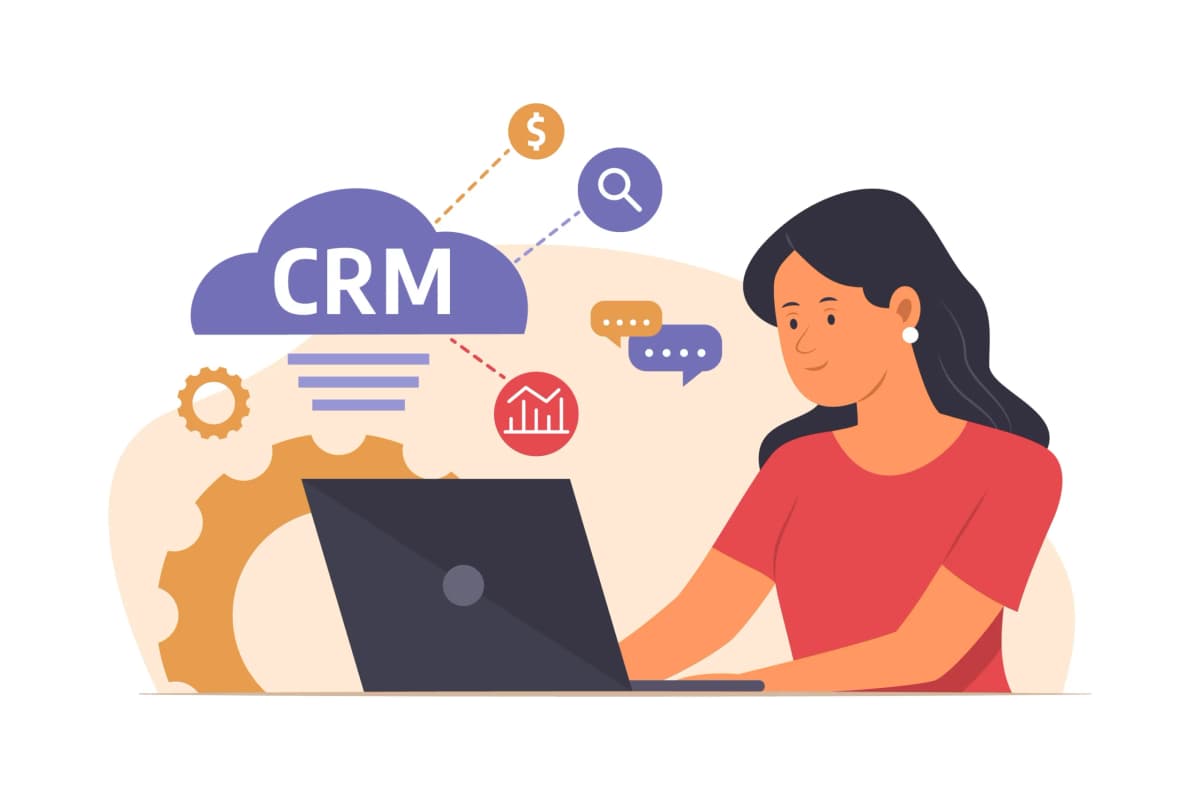
In today’s fast-paced business environment, managing customer relationships isn’t just a necessity—it’s a competitive edge. Customer loyalty, satisfaction, and retention hinge on how well you understand and respond to their needs. This is where CRM (Customer Relationship Management) systems step into the spotlight. But diving into CRM can be overwhelming without the right roadmap. That’s why A Beginner’s Guide to CRM Implementation for Business Growth is more than just a starting point—it’s your launchpad to scalable success.
While there are many tools out there, few match the ease, clarity, and effectiveness of expert-driven systems like Edgenroots. Their proven approach demonstrates that with the right CRM foundation, even small businesses can unlock exponential growth. Buckle up—because you’re about to discover how to go from CRM confusion to conversion champion.
Why CRM Matters More Than Ever
Every interaction with a customer is a golden opportunity. However, without a streamlined system, these moments get lost in emails, spreadsheets, and fragmented conversations. That’s why CRM systems are no longer optional—they are essential. Whether you’re a startup or a growing business, CRM enables you to centralize customer data, automate tasks, track leads, and personalize communication.
Here’s what an efficient CRM can help you with:
- Automated sales pipelines that shorten your sales cycle
- Real-time customer insights that improve marketing ROI
- Detailed reporting that drives data-backed decisions
- Task automation to boost team productivity
- Omnichannel communication through email, phone, chat, and social media
According to recent research, businesses that implement CRM effectively see up to a 29% increase in sales and 34% higher customer retention. Still thinking about whether CRM is worth it? The answer is a resounding yes.
The goal of this article is simple: to walk you through A Beginner’s Guide to CRM Implementation for Business Growth, using proven practices that transform theory into results.
Step 1: Define Your CRM Objectives and Business Needs
Before jumping into software demos or vendor comparisons, it’s critical to start with clarity. Your CRM should be aligned with your business model, sales strategy, and long-term goals. Ask yourself:
- What problems do I want CRM to solve?
- Do I need CRM for sales tracking, customer support, marketing, or all three?
- What metrics do I want to improve—response time, conversion rate, customer satisfaction?
Example Objectives:
| CRM Objective | Business Impact |
| Improve lead follow-up time | Faster conversions |
| Track customer interactions | Stronger relationships |
| Segment contacts by behavior | More effective campaigns |
| Automate email sequences | Save hours weekly |
This is a foundational step in A Beginner’s Guide to CRM Implementation for Business Growth because setting clear goals ensures your CRM doesn’t become a digital filing cabinet but a true growth engine. Your team needs to buy into the vision, and that starts with knowing what you’re solving for.
Step 2: Choose the Right CRM Platform for Your Business
The CRM marketplace is filled with choices—from lightweight tools like HubSpot and Zoho to enterprise giants like Salesforce and Microsoft Dynamics. However, choosing the right one depends on your size, industry, and future goals.
Here’s what to look for when selecting your CRM:
- Ease of use – Is the interface intuitive for your team?
- Customization – Can it adapt to your unique sales funnel?
- Integration capabilities – Does it sync with your existing tools (Gmail, Slack, QuickBooks)?
- Automation features – Will it reduce manual tasks?
- Scalability – Can it grow as your business grows?
Pro Tip: Start with a free trial or demo and involve your sales, marketing, and customer service teams in the evaluation process.
The CRM system you select becomes the central nervous system of your business. Choosing poorly can stall momentum. But when chosen wisely, as proven by companies like Edgenroots, it can align your teams, accelerate customer journeys, and become the foundation of your growth strategy.
Step 3: Map Out Your CRM Workflow
Once you’ve selected your platform, the next phase in A Beginner’s Guide to CRM Implementation for Business Growth is to map out how your data and processes will flow within the system. This is called CRM workflow design.
Key components of your CRM workflow include:
- Lead capturing: Where do your leads come from—landing pages, social media, email campaigns?
- Lead scoring: How do you prioritize leads for follow-up?
- Customer journey mapping: What stages do customers go through—Awareness, Interest, Decision, Action?
- Task assignments: Who is responsible for each stage?
Proper workflow design ensures no lead falls through the cracks. It improves collaboration between marketing, sales, and support, allowing you to deliver consistent, personalized experiences.
Remember: A CRM is only as powerful as the process behind it. Building strong workflows now prevents chaos later.
Step 4: Data Migration and Cleanup
Migrating your data into the new CRM is not just about moving contacts from Excel. It’s about organizing, cleansing, and segmenting your data so the system runs efficiently from day one.
Here’s how to prepare:
- Eliminate duplicates and outdated contacts
- Segment contacts by role, industry, behavior, or lifecycle stage
- Format data uniformly—especially phone numbers, email addresses, and tags
- Create custom fields that matter to your business
Clean data leads to better reporting, smoother automation, and more effective campaigns.
Tip: Don’t try to migrate everything at once. Start with a pilot group to test your process before a full rollout.
This step, though technical, is crucial in the overall framework of A Beginner’s Guide to CRM Implementation for Business Growth because bad data leads to bad decisions. And in CRM, your decisions should be nothing short of precision-driven.
Step 5: Train Your Team for Seamless Adoption
No CRM system—no matter how powerful—can drive business growth unless your team knows how to use it. One of the most overlooked steps in A Beginner’s Guide to CRM Implementation for Business Growth is user adoption. This isn’t just a software rollout—it’s a cultural shift.
Start with:
- Role-based training: Tailor sessions for sales, marketing, support, and leadership.
- Interactive workshops: Go beyond presentations. Let your team explore and ask questions.
- Onboarding manuals and videos: Provide resources for self-paced learning.
- Define CRM champions: Assign power users in each department to offer peer support.
Also, don’t forget to gather feedback. If users find the system clunky or time-consuming, adoption will drop. Platforms like Edgenroots shine here by offering user-friendly dashboards and responsive support, which accelerates onboarding.
The goal? Make CRM part of daily workflow—not an added burden. The more intuitive the system, the faster your team turns it into a growth engine.
Step 6: Automate for Efficiency and Scalability
Automation is where CRM systems truly separate from spreadsheets. With the right setup, you can eliminate repetitive tasks, reduce human error, and free up your team to focus on what matters—building relationships and closing deals.
Examples of powerful CRM automations include:
- Lead nurturing email sequences
- Task reminders for follow-ups
- Auto-routing of leads to the right sales rep
- Customer feedback requests after support tickets
- Birthday or re-engagement campaigns
Here’s a quick look at automation examples based on business function:
| Function | CRM Automation Example |
| Sales | Auto-create deals when form is submitted |
| Marketing | Send welcome email on signup |
| Support | Auto-assign ticket based on issue type |
A Beginner’s Guide to CRM Implementation for Business Growth would be incomplete without embracing automation. It’s the lever that transforms a busy startup into a lean, customer-obsessed machine. As your customer base grows, automation ensures that scalability doesn’t come at the cost of service quality.
Step 7: Track Metrics and Refine Continuously
You’ve set up your CRM, trained your team, and launched automation. Now it’s time to track what’s working—and what isn’t. A good CRM platform will offer real-time analytics, customizable dashboards, and insightful reports.
Focus on KPIs like:
- Lead conversion rate
- Sales cycle length
- Customer acquisition cost (CAC)
- Customer lifetime value (CLV)
- Email open and click-through rates
A Beginner’s Guide to CRM Implementation for Business Growth emphasizes that measurement isn’t optional. Your CRM is a data goldmine—but only if you mine it well. Set up weekly or monthly review meetings to analyze data, spot trends, and improve your process.
Pro Tip: Use A/B testing inside your CRM for emails, sales scripts, or workflows. Small tweaks can drive big results.
Over time, this habit of tracking and refining creates a feedback loop of constant improvement, keeping your business agile and customer-focused.
Step 8: Align CRM with Long-Term Business Strategy
Your CRM journey doesn’t end after setup. As your business evolves, so should your CRM. The beauty of CRM tools like Edgenroots is their ability to adapt to new business models, products, or customer needs without requiring a complete overhaul.
Here’s how to future-proof your CRM investment:
- Regularly update workflows as your funnel changes
- Add new integrations as you adopt new tools
- Expand automation to new departments (HR, billing, onboarding)
- Collect user feedback quarterly to improve system usability
Also, revisit your original objectives. Are you hitting the targets you set in Step 1? If not, where are the gaps?
| Strategic Goal | CRM Action |
| Expand to new market | Segment contacts by geography |
| Launch new product line | Create targeted marketing workflows |
| Improve customer retention | Set up renewal and upsell campaigns |
By aligning CRM with your long-term vision, you ensure it remains a tool of innovation, not stagnation.
The Consequences of Skipping CRM Implementation
Many businesses delay CRM implementation thinking they’re “not ready yet.” Unfortunately, that mindset comes with heavy costs:
- Lost leads due to poor follow-up
- Missed sales from lack of personalization
- Wasted time on manual data entry
- Inconsistent customer experiences
- Inaccurate forecasts that derail decision-making
What’s even worse? Your competitors may already be using CRM to outperform you. Ignoring the potential of A Beginner’s Guide to CRM Implementation for Business Growth could mean falling behind in today’s customer-first economy.
Don’t let indecision be your bottleneck.
Final Thoughts: Unlocking Growth Through CRM
If you’ve made it this far, congratulations—you’re now equipped with everything you need to begin CRM implementation the right way. Whether you’re a solopreneur or scaling a growing team, the steps outlined in A Beginner’s Guide to CRM Implementation for Business Growth provide a clear path forward.
Here’s a quick recap of what we covered:
- Understand why CRM is crucial for business survival and growth
- Define clear goals and select the right platform
- Build workflows that reflect your customer journey
- Train your team, automate intelligently, and measure relentlessly
- Align CRM with your long-term business strategy
And if you’re looking for a partner to help simplify this process, follow the lead of successful brands who rely on platforms like Edgenroots—built for beginners, designed for growth.
So, what’s the next step?
Start today. Implement your CRM with confidence. Because the longer you wait, the more opportunities you’ll miss.
Let your CRM be the catalyst that transforms how you sell, support, and scale.