An ERP software development company designs and builds a single system that runs your inventory, sales, invoicing, approvals and reporting in one place. In India, a mid-size custom ERP typically costs Rs 8 lakh to Rs 25 lakh and takes 3 to 6 months, while multi-branch enterprise platforms run Rs 25 lakh to Rs 1 crore+ over 6 to 12+ months.
Most businesses do not wake up wanting an ERP. They wake up to a stock count that does not match the books, a purchase approval stuck in someone’s inbox, or a sales team quoting prices from an old spreadsheet. Each department has patched its own problem with its own tool, and nobody sees the full picture.
That is the gap a custom ERP closes. At EdgeNRoots, we build custom software and enterprise systems for businesses in India, Canada and the UAE, with a strong focus on manufacturing, insurance and hospitality. This guide walks through how an ERP project actually runs, what it costs and how long it takes, so you can plan with real numbers instead of guesses.
What Does an ERP Software Development Company Actually Do?
A ready-made ERP vendor sells you a licence and asks your team to adjust to its screens. An ERP software development company works the other way around. It studies how your business already operates, then builds software around those workflows.
In practice, that covers four kinds of work:
- Workflow mapping: understanding how orders, stock, purchases, approvals and invoices move between your teams today.
- System design: deciding which modules you need, who can see what, and how data flows between departments.
- Development and integration: building the modules and connecting them to the tools you already use, such as accounting software, payment gateways, SMS or WhatsApp.
- Launch and support: moving your data across, training your people and keeping the system secure and updated after go-live.
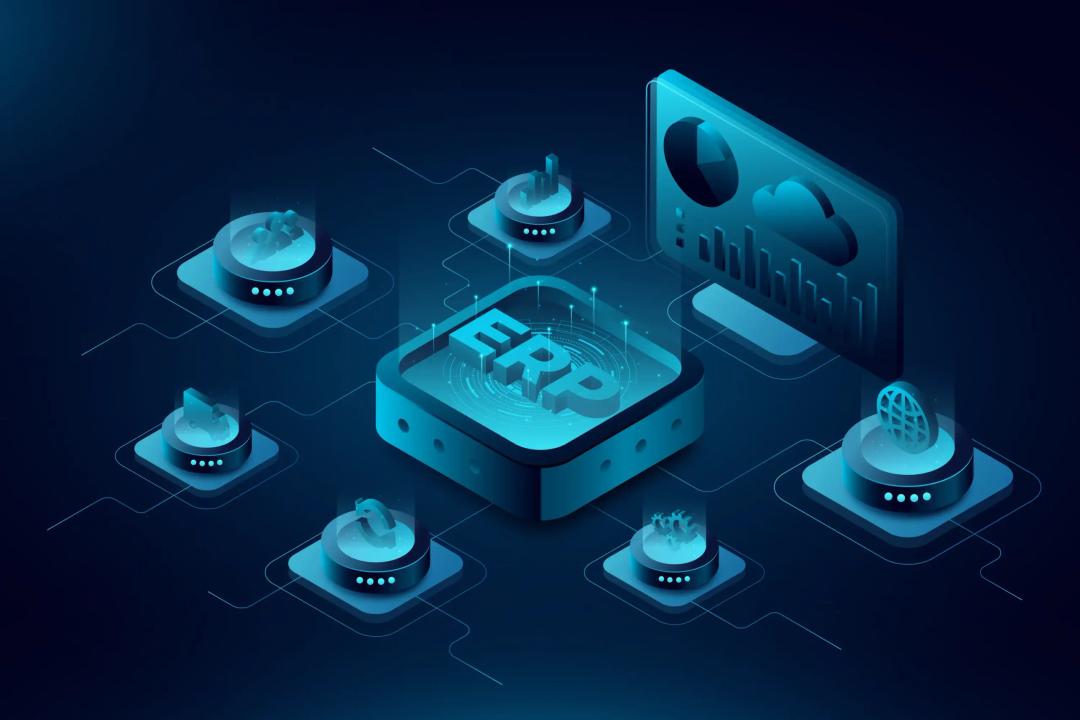
The result is one source of truth. Sales can see live stock before promising a delivery date. Accounts can see every approved purchase. Management gets one dashboard instead of five reports stitched together on a Monday morning.
Is Custom ERP Software Development Better Than a Ready-Made ERP?
This is the first decision most owners face, and the honest answer is that it depends on your size and how unusual your processes are.
| Factor | Ready-made ERP | Custom ERP |
| Fit to your workflow | Your team adapts to the software | Software is built around your workflow |
| Licence model | Usually per-user, recurring | No per-user fees on an open-source core |
| Code ownership | Vendor owns the code | You typically own the code and database under the project agreement |
| Upfront cost | Lower | Higher |
| Long-term cost | Grows with every new user | Mostly hosting and maintenance |
| Changes later | Limited to what the vendor allows | Add or change modules as you grow |
Per-user licence fees are the hidden weight. Over a few years, they can exceed what a custom build would have cost, especially once your team grows past a couple of dozen users. Our breakdown of custom vs ready-made shows how that break-even works with real three-year numbers.
A ready-made tool can still be the cheaper choice for a small team with standard processes. Custom ERP makes sense when you have many users, multiple branches, industry-specific steps, or you are tired of paying for features you never use.
What Is the ERP Development Process Step by Step?
A good ERP software development company does not disappear for six months and return with a finished product. At EdgeNRoots, we first understand your business goals, then share a roadmap, build in stages and take your feedback at each step. Here is what each stage looks like.
Stage 1: Discovery and Requirements
We sit with the people who will use the system every day, not only management. Storekeepers, accountants, sales staff and plant supervisors each see a different part of the problem. The output is a clear list of modules, user roles, approval rules and the integrations you need.
Stage 2: Roadmap and Architecture
Next, we turn those requirements into a phased roadmap. We use a microservices and modular approach, so each part of your ERP can be changed or extended later without rebuilding the whole system. This is also where we decide the first version’s scope, which keeps both cost and risk in check.
Stage 3: Build in Sprints
Development follows Agile and DevOps practices, with continuous integration, version control and automated testing. Our core stack is open-source, including Next.js, React, Node.js and TypeScript, so you avoid licensing fees on the foundation of your system. You see working screens early and give feedback while changes are still cheap.
Stage 4: Integrations and Data Migration
Your ERP has to talk to the tools already running your business. Payment gateways, accounting tools, GST invoicing, SMS and WhatsApp each need connecting. As a verified Meta Business Partner, EdgeNRoots can also connect your ERP to the official WhatsApp Business API for order updates, approvals and reminders. Old records from spreadsheets or legacy systems are cleaned, mapped and verified before they move across.
Stage 5: Security, Testing and Launch
Security is designed in, not bolted on. Our approach is guided by ISO 27001 and NIST frameworks, with encryption, firewalls, multi-factor authentication and role-based user access. After testing with real users, the system goes live, usually one department or branch at a time.
Stage 6: Training and Ongoing Support
Software only pays off if people use it. We train your team, then keep improving the system with updates, fixes and new modules as your business grows.
How Much Does an ERP Software Development Company Charge in India?
Cost depends on scope more than anything else. Based on our software cost guide, these are indicative 2026 market ranges for Indian development teams. They are not fixed quotes.
| Project size | Typical examples | Estimated cost | Typical timeline |
| Small tool or first module | Internal dashboard, simple workflow or approval app | Rs 3 lakh to Rs 8 lakh | 4 to 10 weeks |
| Mid-size business system | Inventory system, custom CRM, customer portal | Rs 8 lakh to Rs 25 lakh | 3 to 6 months |
| Large or enterprise ERP | Multi-branch ERP-style platform with many integrations | Rs 25 lakh to Rs 1 crore+ | 6 to 12+ months |
Key points to budget for:
- Maintenance: plan around 15 to 20 percent of the original build cost every year.
- Hosting and cloud: servers, storage, databases and backups grow with your users and data.
- Third-party services: SMS, email, WhatsApp messaging and AI usage are usually billed separately.
- Data migration and training: often left out of quotes, but always needed.
What Pushes ERP Development Cost in India Up?
The biggest cost drivers are the number of business rules, user roles and permissions, integrations with old systems, AI or automation features, and security requirements. Role-based access is one of the most underestimated items. Legacy systems with no API can add weeks on their own. Finance and insurance businesses usually need more security and audit work than simpler operations.
How Can You Reduce the Cost?
Start with a focused first version covering the modules your team uses daily, then add more after feedback. Reusing proven modules also helps. EdgeNRoots builds on ENR Accelerator, a set of pre-built modules including Lead, Customer, Opportunity, Invoice, Mail, SMS, WhatsApp, Approval, Task, Data Analytics, Reporting, Doc Management, Security and User Access. Starting from these means more of your budget goes into the features that are unique to your business.
How Long Does It Take to Build an ERP System?
Timelines follow the same bands as cost. A first module or small tool can go live in 4 to 10 weeks. A mid-size system usually takes 3 to 6 months, and a multi-branch enterprise ERP can take 6 to 12 months or more.
Building on ready modules shortens this. Building everything from scratch can take six to nine months even for a mid-size system, while modular custom builds often reach launch in weeks rather than quarters. A phased rollout also means you start getting value from the first module while the next one is still in development.
Which ERP Modules Does Your Business Need?
Not every business needs every module. The right mix depends on your industry:
- Manufacturing: inventory with real-time tracking, forecasting and automated reordering, purchase approvals, supply chain visibility and production insights.
- Insurance: lead and customer records, document management, approval chains, audit logs and strict user access controls.
- Hospitality: bookings, billing and invoices, guest records, task assignment and WhatsApp updates.
- Trading and distribution: stock across locations, quotes, invoicing, payment follow-ups and sales reporting.
Across all of them, reporting and data analytics tie it together. EdgeNRoots also builds BI dashboards with tools like Tableau and Power BI, so management sees real numbers instead of waiting for month-end reports.
How to Choose an ERP Software Development Company?
Before you sign, ask every vendor these questions:
- Who owns the code and database? You should, under the project agreement.
- Are there per-user licence fees? An open-source core avoids them.
- Can you start with one module? A phased plan lowers risk.
- How will you handle my data migration? Get it in writing.
- What security standards do you follow? Look for ISO 27001 or NIST-guided practices.
- What does yearly maintenance cost? Ask for a clear figure upfront.
- How will my team give feedback during the build? Staged demos beat a big reveal at the end.
Why Data Protection Matters in 2026
India notified the DPDP Rules in November 2025, and most business obligations apply by May 2027. Any ERP that stores customer or employee data should plan consent records, deletion requests and access logs from the first version. Building this in now is far cheaper than retrofitting it later.
Why Businesses Choose EdgeNRoots for Custom ERP
- Built around your workflow: we start by understanding your challenges, goals and technical requirements.
- No per-user licence fees: an open-source stack keeps long-term costs predictable.
- Faster start: ENR Accelerator modules cover common needs from day one.
- Modular architecture: add or change modules as you grow.
- WhatsApp built in: verified Meta Business Partner for official WhatsApp Business API integration.
- Security first: practices guided by ISO 27001 and NIST.
- Cloud ready: deployment on AWS or Azure with backups and scaling.
- Global reach: offices in India, Canada and the UAE.
Frequently Asked Questions
What is ERP software development?
It is building a custom system that connects inventory, sales, finance, approvals and reporting around your own business workflows.
Can a small business afford custom ERP?
Yes. Start with one module, from around Rs 3 lakh, and add more as the business grows.
Will my custom ERP work with WhatsApp?
Yes. EdgeNRoots is a verified Meta Business Partner and integrates the official WhatsApp Business API.
Can I add new modules later?
Yes. A modular architecture lets you add or change modules without rebuilding the entire system.
Does custom ERP need ongoing maintenance?
Yes. Budget around 15 to 20 percent of the build cost yearly for updates, fixes and security.
Conclusion
The right ERP software development company does more than write code. It maps your workflows, builds in stages, protects your data and stays with you after launch. Plan with real ranges: Rs 8 lakh to Rs 25 lakh and 3 to 6 months for a mid-size system, more for multi-branch platforms, plus 15 to 20 percent yearly for maintenance.
If spreadsheets, disconnected tools and per-user licence bills are slowing your business down, EdgeNRoots can help you build an ERP that fits the way you already work. Book a free consultation and get a roadmap and scope-based estimate for your business.